Timothy Noah's piece in The New Republic is a sweeping and sharply argued indictment of Silicon Valley's ideological drift, and it lands with considerable force. The central argument is historically grounded: what began as an industry promising to disperse power and information to ordinary people degenerated into corporate predation, fetishizing surveillance, misinformation, and monopolization as it races toward an AI Singularity. newrepublic
What makes the article more than a polemic is its careful tracing of the economic incentives beneath the messianic rhetoric. The $670 billion to be spent this year by Meta, Amazon, Microsoft, and Alphabet on AI development represents 2.1 percent of U.S. GDP, slightly more than what the country spent building the railroads in the 1850s newrepublic — and unlike those earlier infrastructure investments, this one draws entirely on private funds, with private actors setting the rules. That financial scale helps explain why tech lords have moved from libertarian indifference to active political engagement, and why they frame any regulatory attempt as an existential threat rather than a reasonable policy debate.
The religious framing adopted by figures like Peter Thiel, who delivered lectures on the Antichrist in which he cast AI skeptics like Greta Thunberg and Eliezer Yudkowsky as agents of Satan, newrepublic is treated not as eccentricity but as the most literal expression of a broader millenarian logic shared across the industry. That logic, Noah argues, serves a very material purpose: it immunizes private capital from democratic accountability by recasting government regulation as spiritual warfare.
The piece is not without its weaker moments. The call to repeal Section 230 is raised and then immediately dismissed as a "pipe dream," which somewhat undercuts the article's closing call to action. And the framing of tech as uniformly malevolent risks flattening real distinctions, particularly regarding AI safety efforts. Still, as a diagnosis of how concentrated wealth distorts both ideology and governance, it is one of the more serious treatments of the subject in mainstream American journalism right now.




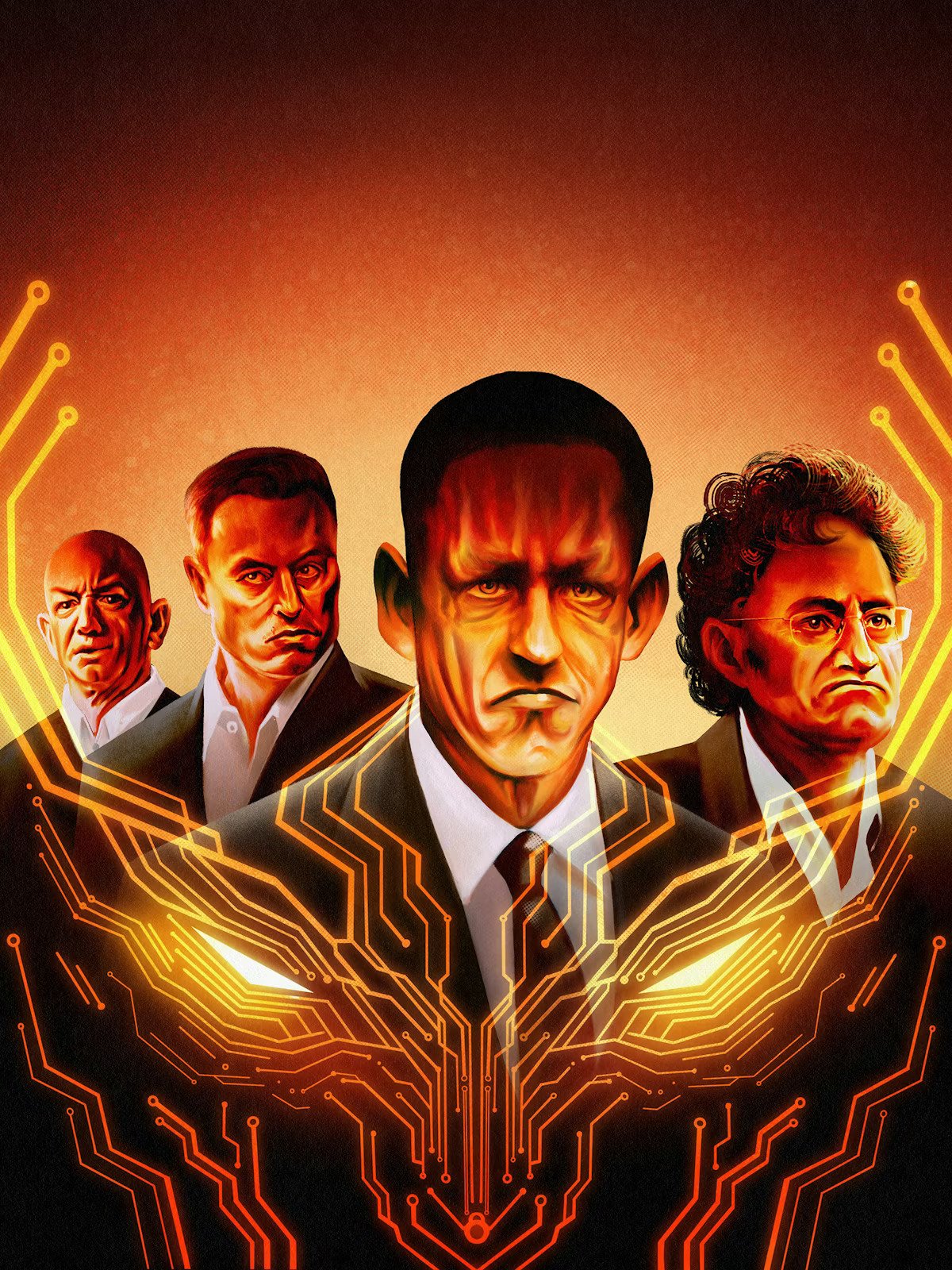
Timothy Noah's piece in The New Republic is a sweeping and sharply argued indictment of Silicon Valley's ideological drift, and it lands with considerable force. The central argument is historically grounded: what began as an industry promising to disperse power and information to ordinary people degenerated into corporate predation, fetishizing surveillance, misinformation, and monopolization as it races toward an AI Singularity. newrepublic What makes the article more than a polemic is its careful tracing of the economic incentives beneath the messianic rhetoric. The $670 billion to be spent this year by Meta, Amazon, Microsoft, and Alphabet on AI development represents 2.1 percent of U.S. GDP, slightly more than what the country spent building the railroads in the 1850s newrepublic — and unlike those earlier infrastructure investments, this one draws entirely on private funds, with private actors setting the rules. That financial scale helps explain why tech lords have moved from libertarian indifference to active political engagement, and why they frame any regulatory attempt as an existential threat rather than a reasonable policy debate. The religious framing adopted by figures like Peter Thiel, who delivered lectures on the Antichrist in which he cast AI skeptics like Greta Thunberg and Eliezer Yudkowsky as agents of Satan, newrepublic is treated not as eccentricity but as the most literal expression of a broader millenarian logic shared across the industry. That logic, Noah argues, serves a very material purpose: it immunizes private capital from democratic accountability by recasting government regulation as spiritual warfare. The piece is not without its weaker moments. The call to repeal Section 230 is raised and then immediately dismissed as a "pipe dream," which somewhat undercuts the article's closing call to action. And the framing of tech as uniformly malevolent risks flattening real distinctions, particularly regarding AI safety efforts. Still, as a diagnosis of how concentrated wealth distorts both ideology and governance, it is one of the more serious treatments of the subject in mainstream American journalism right now.